
Amazing PVI Encoder IPTV Guide 2025: Complete Setup & Tips
PVI Encoder IPTV is revolutionizing the way we consume and distribute television content. This cutting-edge technology allows for the efficient and high-quality encoding of video signals, making them ...
PVI Encoder IPTV is revolutionizing the way we consume and distribute television content. This cutting-edge technology allows for the efficient and high-quality encoding of video signals, making them suitable for transmission over IP networks. Understanding the intricacies of PVI Encoder IPTV is crucial for anyone looking to enter or advance within the modern broadcasting landscape. The demand for flexible, scalable, and high-definition content delivery continues to grow, and PVI Encoder IPTV stands at the forefront of meeting these demands.
Table of Contents
- Understanding the Fundamentals of PVI Encoder IPTV
- Key Advantages of Implementing PVI Encoder IPTV in 2025
- Choosing the Right PVI Encoder IPTV Solution
- Technical Specifications and Standards for PVI Encoder IPTV
- Future Trends and Innovations in PVI Encoder IPTV
- Optimizing Your PVI Encoder IPTV for Maximum Performance
- FAQ about PVI Encoder IPTV
- Related IPTV Services
Understanding the Fundamentals of PVI Encoder IPTV
At its core, PVI Encoder IPTV involves converting traditional video and audio signals into a digital format that can be streamed over the internet. This process is essential for delivering content to a wide range of devices, from smart TVs and set-top boxes to smartphones and tablets. The “PVI” in PVI Encoder IPTV often refers to specialized or proprietary video encoding solutions that offer enhanced compression, superior video quality, and lower latency compared to generic encoders. These encoders are designed to handle various input sources, including satellite, cable, terrestrial, and even live camera feeds.
The journey of content through a PVI Encoder IPTV system begins with the source signal. This analog or digital signal is fed into the PVI encoder, which then digitizes and compresses the data. Compression is a critical step, as it reduces the bandwidth required for transmission without significantly sacrificing video quality. Advanced compression algorithms like H.264 (AVC) and H.265 (HEVC) are commonly employed, allowing for stunning HD and even 4K content delivery while optimizing network resources. Without efficient PVI Encoder IPTV, delivering high-quality streams would be impractical due to bandwidth limitations.
Once compressed, the digital data is encapsulated into IP packets. These packets are then sent over an IP network, which can be a local area network (LAN), a wide area network (WAN), or the public internet. The beauty of PVI Encoder IPTV lies in its ability to leverage existing network infrastructure, making it a cost-effective solution for many broadcasters and content providers. This flexibility also extends to distribution, as content can be unicast (one-to-one), multicast (one-to-many within a specific network), or broadcast (one-to-all over the internet).
The final step involves a decoder at the user’s end, which receives the IP packets, reconstructs the video and audio data, and displays it on the chosen device. This entire process, from encoding to decoding, must be seamless and low-latency to provide a satisfactory user experience. High-performance PVI Encoder IPTV systems are engineered to minimize delays, ensuring that live events are truly live and on-demand content is instantly accessible.
Key Advantages of Implementing PVI Encoder IPTV in 2025
The adoption of PVI Encoder IPTV offers numerous benefits for content providers, businesses, and end-users alike. One of the most significant advantages is its unparalleled flexibility. Unlike traditional broadcasting methods that are often limited by geographical boundaries and infrastructure, PVI Encoder IPTV allows content to be delivered globally, reaching audiences wherever an internet connection is available. This opens up vast opportunities for expansion and market penetration.
Another crucial benefit is cost-effectiveness. While initial setup costs for a robust PVI Encoder IPTV system might seem substantial, the long-term operational savings are significant. By leveraging IP networks, companies can reduce expenses associated with satellite transponder leases, dedicated broadcast infrastructure, and traditional cable distribution. Furthermore, PVI Encoder IPTV enables more efficient use of bandwidth, which translates to lower data transmission costs, especially when delivering high-definition or 4K content. For detailed pricing information on various IPTV solutions, you can visit our pricing page.
Scalability is also a major draw. A PVI Encoder IPTV system can easily be scaled up or down to meet changing demands. Whether you need to add more channels, support a larger audience, or introduce new services, the IP-based architecture makes these adjustments relatively straightforward. This agility is vital in the fast-paced media landscape, where consumer preferences and technological advancements evolve rapidly. Businesses can adapt quickly without needing to overhaul their entire infrastructure.
Enhanced interactivity and personalization are also key advantages. PVI Encoder IPTV platforms can integrate features like video-on-demand (VOD), catch-up TV, interactive program guides (EPGs), and even personalized content recommendations. This level of engagement is difficult to achieve with traditional broadcasting and significantly improves the user experience. Content providers can gather valuable data on viewer habits, allowing for more targeted advertising and content creation.
Choosing the Right PVI Encoder IPTV Solution
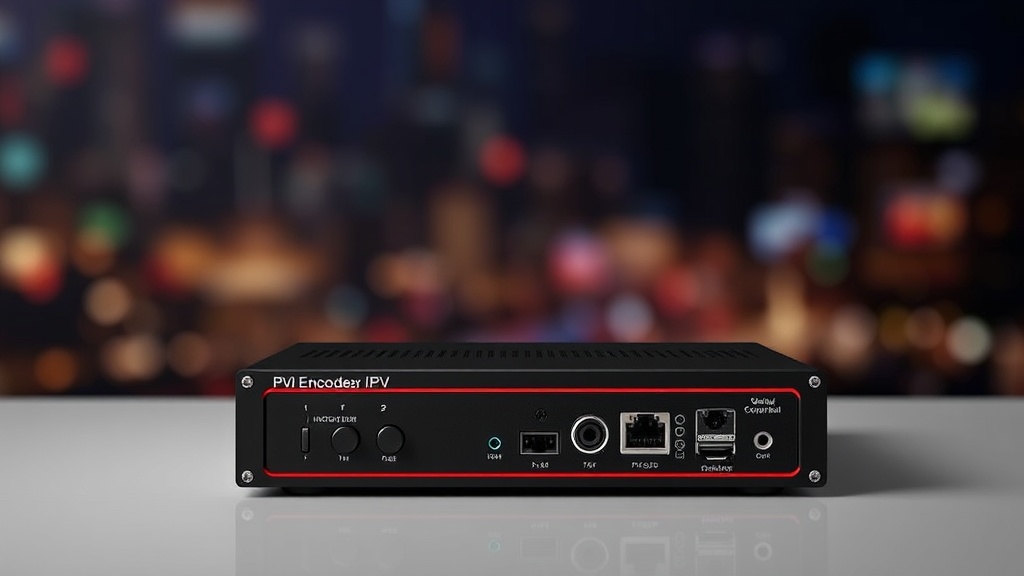
Selecting the appropriate PVI Encoder IPTV solution is paramount for the success of any IPTV deployment. The market offers a wide array of encoders, each with its own set of features, capabilities, and price points. Factors to consider include the type of input signals you need to support (HDMI, SDI, composite, etc.), the desired output resolution and bitrate, the number of channels you plan to encode, and the specific compression standards required (H.264, H.265).
Latency is another critical factor, especially for live streaming applications. Some PVI Encoder IPTV solutions are optimized for ultra-low latency, which is essential for sports broadcasting, news reporting, and interactive events. Security features are also vital, as content protection and digital rights management (DRM) are crucial for safeguarding intellectual property and preventing unauthorized access. Look for encoders that support encryption and secure streaming protocols.
Integration with existing infrastructure is also a key consideration. A good PVI Encoder IPTV system should seamlessly integrate with your current network setup, content management systems (CMS), and billing platforms. Compatibility with various streaming protocols like HLS, DASH, RTMP, and UDP/RTP is also important to ensure broad device support. For information on compatible devices, check out our devices page.
Finally, consider the vendor’s reputation, technical support, and software update policies. A reliable vendor will provide comprehensive documentation, prompt customer service, and regular firmware updates to ensure your PVI Encoder IPTV solution remains secure and up-to-date with the latest industry standards. Investing in a quality PVI Encoder IPTV solution from a reputable provider can save significant headaches down the line.
Technical Specifications and Standards for PVI Encoder IPTV
The technical landscape of PVI Encoder IPTV is governed by a set of specifications and standards designed to ensure interoperability, quality, and efficiency. Compression codecs are at the heart of this. H.264 (MPEG-4 AVC) has been the industry standard for years, offering excellent compression ratios for HD content. However, H.265 (HEVC) is rapidly gaining traction, providing up to 50% better compression than H.264 at the same quality level, making it ideal for 4K and even 8K content delivery. Modern PVI Encoder IPTV units often support both.
Streaming protocols are equally important. HTTP Live Streaming (HLS) and Dynamic Adaptive Streaming over HTTP (DASH) are the most widely used protocols for delivering adaptive bitrate streaming, allowing content to adjust its quality based on the viewer’s network conditions. Real-Time Messaging Protocol (RTMP) is still used for low-latency live streaming, particularly for ingesting streams from encoders to content delivery networks (CDNs). Understanding these protocols is crucial for optimizing your PVI Encoder IPTV workflow.
Network infrastructure plays a vital role. A robust IP network with sufficient bandwidth and low latency is essential for high-quality PVI Encoder IPTV delivery. Quality of Service (QoS) mechanisms should be implemented to prioritize video traffic and prevent buffering or dropped frames. Multicast capabilities are also highly beneficial for efficient distribution within closed networks, reducing the load on network resources when multiple users are watching the same channel.
Metadata and EPG (Electronic Program Guide) standards are also crucial for a complete PVI Encoder IPTV experience. These standards define how program information, show descriptions, and scheduling data are transmitted and displayed to the end-user. Proper metadata integration enhances discoverability and usability, making it easier for viewers to find the content they want. The evolution of PVI Encoder IPTV continues to push these boundaries.
Future Trends and Innovations in PVI Encoder IPTV
The world of PVI Encoder IPTV is constantly evolving, with new trends and innovations emerging regularly. One of the most significant trends is the increased adoption of cloud-based encoding solutions. Cloud PVI Encoder IPTV offers immense flexibility, allowing content providers to scale their encoding capacity on demand without investing in expensive hardware. This pay-as-you-go model is particularly attractive for businesses with fluctuating encoding needs or those looking to minimize upfront capital expenditures.
Artificial intelligence (AI) and machine learning (ML) are also beginning to play a crucial role. AI-powered PVI Encoder IPTV can optimize compression settings in real-time, adapting to content complexity and network conditions to deliver the best possible quality at the lowest possible bitrate. This intelligent encoding can lead to significant bandwidth savings and improved viewer experiences. AI can also be used for content analysis, automated metadata generation, and even personalized content delivery.
The rise of 5G networks is set to revolutionize PVI Encoder IPTV delivery, especially for mobile users. The high bandwidth and low latency of 5G will enable seamless 4K and even 8K streaming on mobile devices, opening up new possibilities for on-the-go content consumption. This will require PVI Encoder IPTV solutions that are optimized for mobile delivery and can adapt to varying network conditions. The future of PVI Encoder IPTV is intrinsically linked to these network advancements.
Furthermore, the integration of PVI Encoder IPTV with virtual reality (VR) and augmented reality (AR) experiences is an exciting prospect. Imagine live events streamed in immersive 360-degree video, allowing viewers to feel like they are truly part of the action. This will demand even more sophisticated PVI Encoder IPTV technologies capable of handling massive amounts of data and delivering it with ultra-low latency. The possibilities are truly endless for PVI Encoder IPTV.
Optimizing Your PVI Encoder IPTV for Maximum Performance
Achieving peak performance from your PVI Encoder IPTV system requires careful planning and continuous optimization. One of the primary areas for optimization is bandwidth management. Implementing adaptive bitrate streaming is crucial, allowing the system to automatically adjust the video quality based on the viewer’s internet speed. This prevents buffering and ensures a smooth viewing experience, even for users with less stable connections. Regularly monitoring network traffic and making adjustments to your PVI Encoder IPTV settings can significantly improve performance.
Content delivery networks (CDNs) are indispensable for global PVI Encoder IPTV distribution. CDNs cache content closer to the end-user, reducing latency and improving loading times. Choosing a CDN with a wide global presence and robust infrastructure is essential for delivering a high-quality experience to a diverse audience. Integrating your PVI Encoder IPTV with a reliable CDN can dramatically enhance scalability and reliability.
Regular maintenance and software updates are also critical. PVI Encoder IPTV technology is constantly evolving, and keeping your encoders and related software up-to-date ensures you benefit from the latest performance enhancements, security patches, and feature additions. Neglecting updates can lead to performance degradation, security vulnerabilities, or compatibility issues with newer devices and platforms. Many channels are available; check out our channels page for more.
Finally, robust monitoring and analytics tools are essential for understanding how your PVI Encoder IPTV system is performing. These tools can provide insights into viewer engagement, buffering rates, stream quality, and error rates. By analyzing this data, you can identify bottlenecks, troubleshoot issues, and make informed decisions to optimize your PVI Encoder IPTV delivery and improve the overall user experience. Continuous improvement is key to staying competitive in the IPTV market.
FAQ about PVI Encoder IPTV
What exactly is PVI Encoder IPTV?
PVI Encoder IPTV refers to the process and technology used to convert video and audio signals into a digital format suitable for transmission over IP (Internet Protocol) networks. It involves specialized encoders that compress the data efficiently, allowing for high-quality content delivery to various devices via the internet.
Why is PVI Encoder IPTV important for modern broadcasting?
PVI Encoder IPTV is crucial because it offers unparalleled flexibility, scalability, and cost-effectiveness compared to traditional broadcasting. It enables global content delivery, supports various interactive features, and allows for efficient use of bandwidth, making it ideal for the evolving demands of content consumption.
What are the main compression standards used in PVI Encoder IPTV?
The primary compression standards used in PVI Encoder IPTV are H.264 (MPEG-4 AVC) and H.265 (HEVC). H.264 is widely adopted for HD content, while H.265 offers superior compression efficiency, making it the preferred choice for 4K and higher resolution content.
Can PVI Encoder IPTV deliver 4K content?
Yes, modern PVI Encoder IPTV systems are fully capable of delivering 4K and even 8K content. This is largely due to advancements in compression technologies like H.265 (HEVC) and robust network infrastructures that can handle the increased bandwidth requirements.
What factors should I consider when choosing a PVI Encoder IPTV solution?
Key factors include the type of input signals, desired output resolution and bitrate, supported compression standards and streaming protocols, latency requirements, security features, integration capabilities with existing systems, and the vendor’s reputation and support.
Related IPTV Services
You may also visit the following websites for similar services:
Related Articles
Ready to Experience IPTV Satlink?
Join thousands of satisfied customers streaming 25,000+ channels
Get Started Today